Strategy

UGC strategy for local business: a practical method without improvisation

Publishing content without a system usually creates noise: many assets, little decision support. A useful local UGC strategy does not start in editing software. It starts with objective, audience, and quality criteria.

Step 1: set one operational objective

“Increase visibility” is too broad to guide production. Choose one practical goal per cycle: more weekday bookings, more first clinic visits, more gym trials, or more footfall to store.

This decision shapes everything else: creator type, content format, scripting, CTA, and channel mix. Without an operational objective, UGC may generate reach while underperforming commercially.
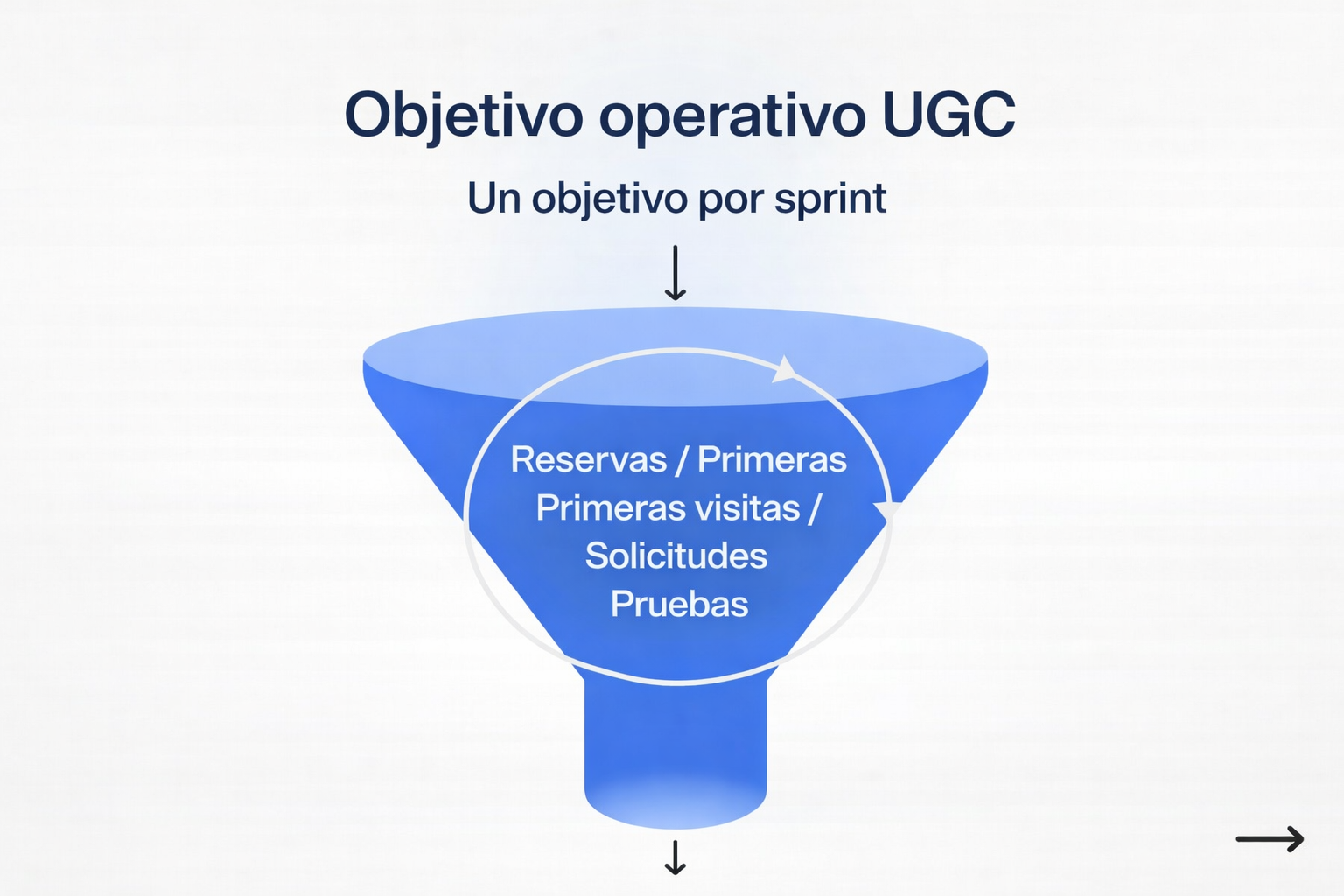
Defining an operational objective for local UGC campaign
One clear objective per cycle improves execution quality.

Step 2: select creators by local and editorial fit

The best fit is not always the largest profile. In local business, three filters usually matter most:

  • Real local proximity: audience and context aligned with your service area.
  • Thematic alignment: food, wellness, beauty, sports, family, or lifestyle.
  • Narrative clarity: ability to explain the experience and remove objections quickly.

For hospitality, for instance, creators who document the full experience often outperform purely aesthetic content.

Step 3: use a concise but rigorous brief

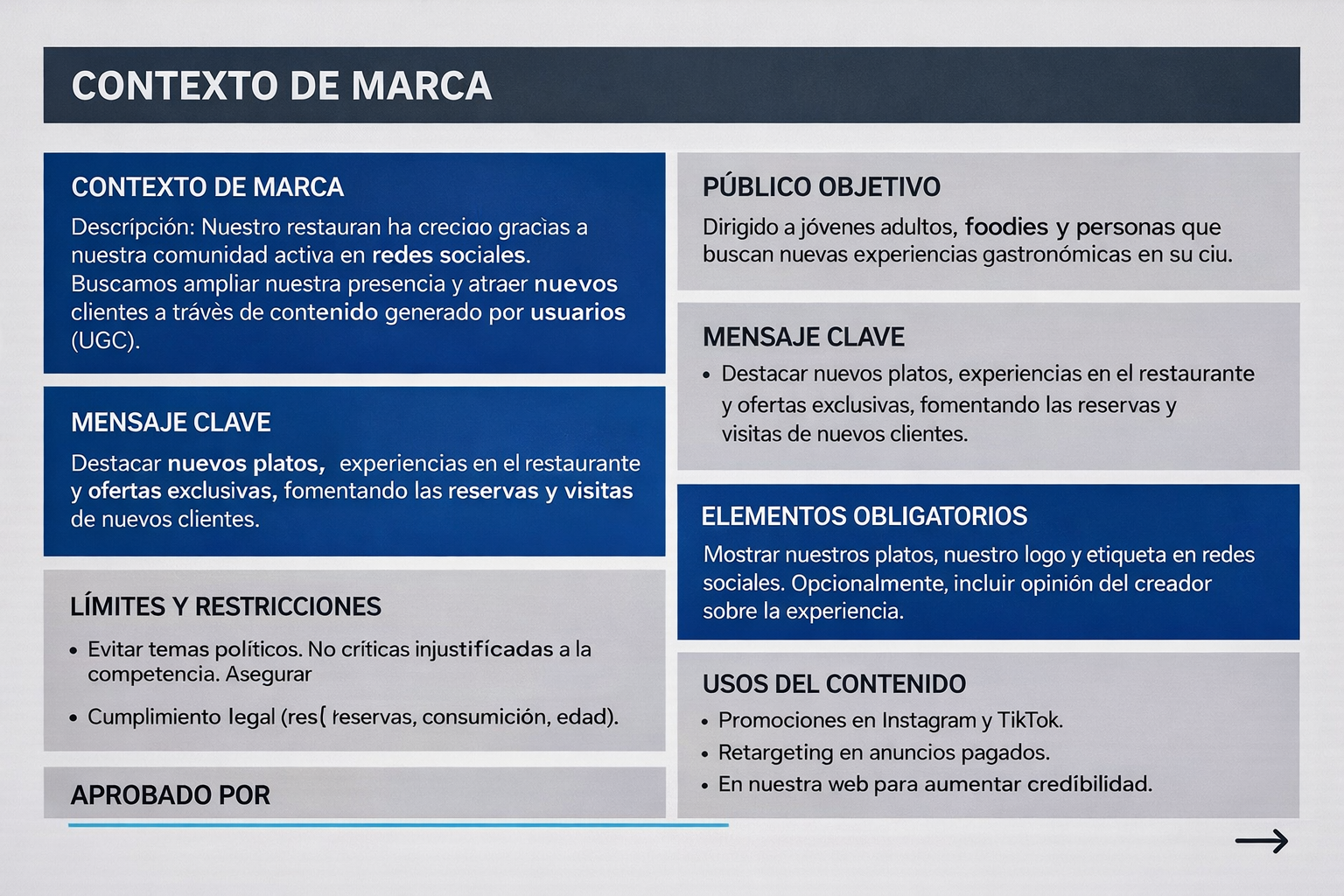
A strong brief does not limit creativity; it removes ambiguity. Include:

  • Business context and priority audience.
  • Core message and communication boundaries.
  • Mandatory information (location, booking, value proposition).
  • Technical delivery standards and usage rights.

Where collaboration is paid, set disclosure expectations from the start.

Creator briefing template for local UGC collaborations
Clear briefs reduce revision loops and protect brand consistency.

Step 4: plan distribution and content reuse

UGC value increases when each asset is reused with intent:

  • Instagram: primary reel plus short supporting stories cut.
  • TikTok: hook-led variation for discovery dynamics.
  • Website/landing: social proof block near conversion points.
  • Paid ads: short variants mapped to key objections.
  • Google profile: visual support for local decision confidence.

If you need conceptual grounding before implementation, read the UGC fundamentals guide.

Step 5: measure business impact, not vanity metrics

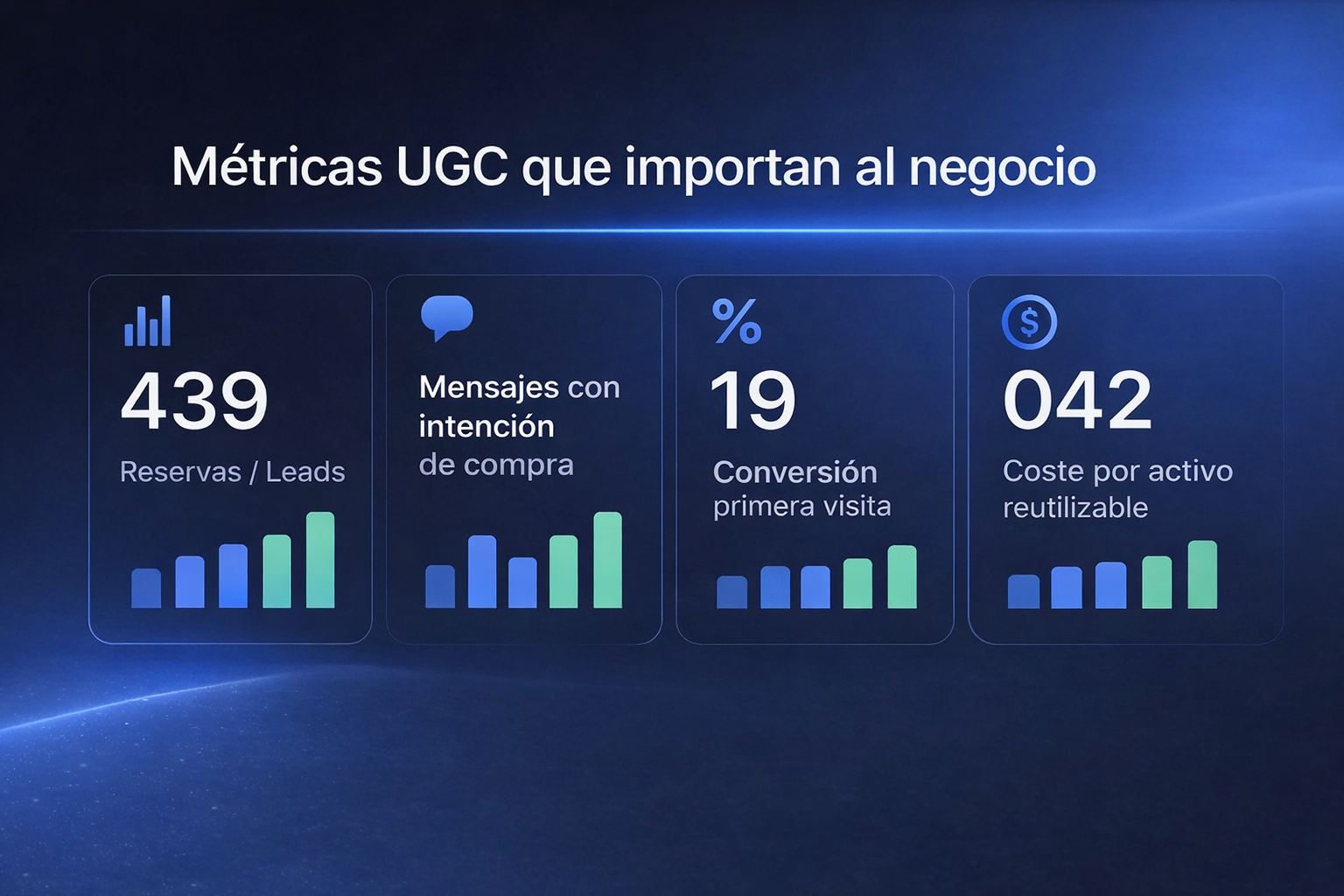
Views are an early signal, not the final KPI. To evaluate local UGC properly, track:

  • Bookings or enquiries associated with each content cycle.
  • Inbound messages with purchase intent.
  • First-visit to customer conversion.
  • Cost per reusable content asset.

As market context, you can benchmark against broad behavioural signals: IAB Spain (2025) reports that 48% of users check social platforms before buying, while 44% state that social content influenced their final decision.

Business-focused metrics for local UGC strategy
Operational KPIs provide clearer learning than reach alone.

With this structure, UGC becomes a repeatable growth layer instead of isolated campaign activity.

Frequently asked questions

How frequently should local businesses publish UGC?

Regular cadence with short review cycles usually works best. Consistency and iteration matter more than short-term volume spikes.

What matters more: reach or content quality?

In local markets, contextual quality often matters more. Relevant content for the right audience tends to convert better.

Does UGC replace paid media?

Not necessarily. It often works best as a complementary layer that strengthens creative quality and credibility.

Next articleInflugeo: UGC platform for local businesses in Spain